
Installing a home EV charger in Calgary: where to start
A step-by-step guide to vehicle requirements, electrical capacity, charger location, permits and planning a dependable Calgary home EV installation.
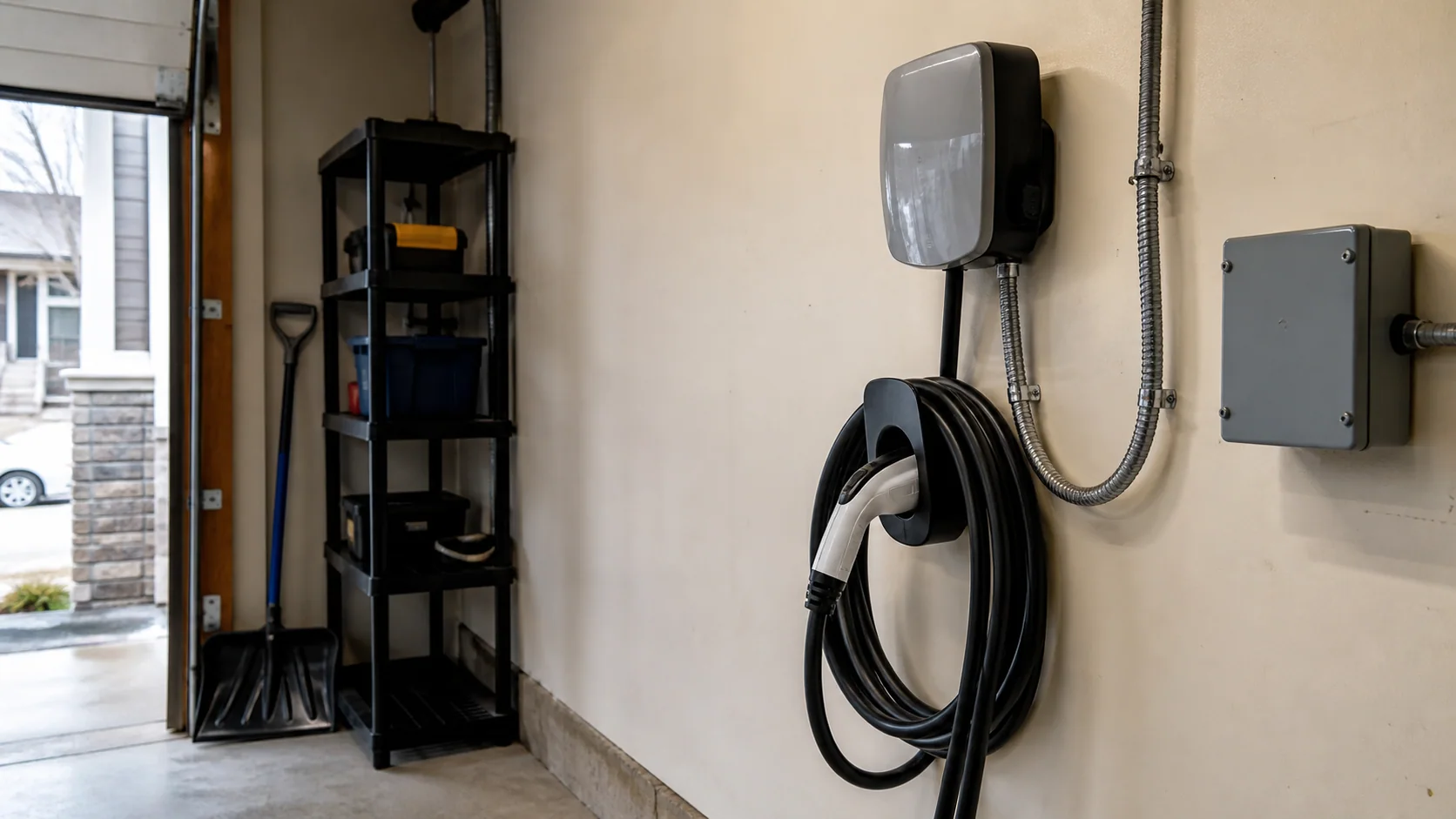
You do not need to select every technical detail before calling an electrician. Begin with five pieces of information: the vehicle, normal daily distance, parking location, preferred charging window and any major electrical additions planned for the home.
1. Check the vehicle before choosing the charger
Confirm the vehicle's AC charging capability and connector. A charger with a higher nameplate rating cannot make a vehicle accept more power than its onboard charger allows. Natural Resources Canada explains current charging levels and connector basics in its EV charging overview.
2. Describe the charging routine
| Question | Why it changes the plan |
|---|---|
| Daily kilometres | Helps estimate how much energy normally needs to be replaced overnight. |
| Time parked | A longer overnight window may reduce the charging power needed. |
| Second EV | May affect charger selection, load sharing and future circuit planning. |
| Winter use | Cold conditions can reduce range and change the amount of overnight recovery desired. |
3. Review the panel and service capacity
The electrician should assess the existing service, panel, connected loads and the proposed charger. Calgary notes that homes have limits on how much load can be added without a service upgrade. Where capacity is constrained, an accepted EV energy-management system may sometimes manage charging within the available service.
4. Choose a location that works every day
- Mount the charger where its cable reaches the charge port without becoming a trip hazard.
- Consider whether the next vehicle may place its charge port elsewhere.
- Plan a protected cable route from the electrical panel to the charger.
- For exterior installations, select equipment and mounting appropriate to the exposure.
- Think about Wi-Fi signal if app connectivity is important.
5. Include permits and inspection in the project
The City of Calgary currently lists an electrical permit for EV charger installation and says installation must follow the load calculation and Part 1 of the Canadian Electrical Code. A professional electrical contractor handles the permit and coordinates inspection for contracted work. Review the City's current electrical permit requirements.
Shared electrical services can add another layer. Calgary's current homeowner permit guidance says certain rowhouse electrification projects require a professional load calculation and awareness or authorization from the condo board or homeowners association. Confirm the property arrangement early.
What to send Verity for an efficient first review
- Vehicle year, make and model
- A photo of the electrical panel and its main rating label
- A photo showing the preferred charger wall and parking position
- Whether the garage is attached or detached
- Any planned EV, heating, air-conditioning or renovation loads
Technical references: current City of Calgary contractor and homeowner electrical-permit guidance and Natural Resources Canada EV charging guidance, reviewed August 12, 2026. Final requirements depend on the home and proposed equipment.