
Level 1 vs. Level 2 EV charging for Calgary homes
A practical comparison of home EV charging speed, electrical requirements and the questions Calgary drivers should answer before choosing equipment.
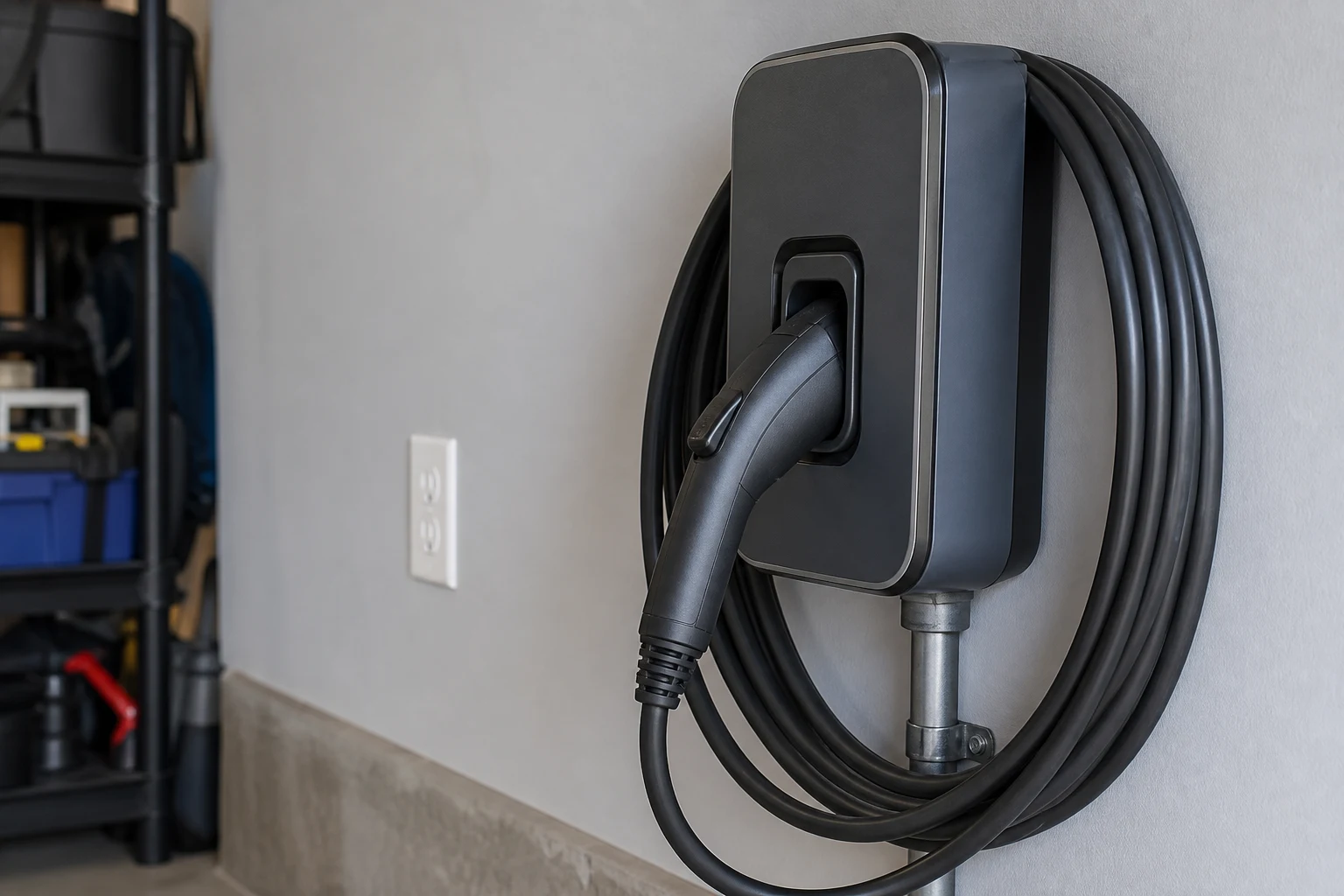
The fastest charger is not automatically the best charger. A useful home-charging plan begins with how far you drive, how long the vehicle normally sits at home and what the electrical system can safely support.
The short version
| Home charging option | Typical electrical supply | NRCan estimated range added per hour | Often suits |
|---|---|---|---|
| Level 1 | 120 V | About 3–8 km | Plug-in hybrids, short commutes or overnight recovery with modest daily driving |
| Level 2 | 208/240 V | About 16–50 km | Battery-electric vehicles, longer commutes and households that want faster overnight recovery |
Those ranges are estimates, not promises. Vehicle limits, charger output, battery temperature, state of charge and Calgary winter conditions all affect actual charging performance. Natural Resources Canada lists Level 1 at 120 V and Level 2 at 208/240 V in its current EV charging guide.
When Level 1 may be enough
If the car is parked for long periods and daily driving is modest, Level 1 can replace the energy used during a normal day without adding a dedicated higher-voltage charger. It can also remain useful as a backup. The practical question is whether the car reliably reaches the charge level you need before the next trip.
Why many drivers choose Level 2
Level 2 provides more charging capacity during the same overnight window. That can matter for longer commutes, larger batteries, multiple drivers or colder weather. It also gives the household more flexibility when a vehicle arrives home at a lower state of charge than usual.
Charger rating is only one part of the plan
- Your vehicle controls the maximum AC charging rate it will accept.
- The electrical panel and service must safely support the new load.
- Cable routing and parking position affect where the charger should be mounted.
- Outdoor equipment must be suitable for the location and exposure.
- Future plans—another EV, heat pump or renovation—may change the best use of available capacity.
The City of Calgary identifies an electrical permit as required for an EV charger and requires the installation to follow the load calculation and Canadian Electrical Code requirements. If capacity is limited, an approved energy-management approach may be an alternative to a service upgrade in some homes. See the City's current contractor electrical-permit guidance.
Our recommendation
Choose charging speed after the load review—not before it. Verity can match the vehicle and daily routine to a clean, permitted installation without assuming every home needs the same solution.
Technical references: Natural Resources Canada EV charging guidance and current City of Calgary electrical-permit information, reviewed August 12, 2026. Requirements and accepted equipment can change; confirm the current project-specific requirements before installation.