
Whole-home surge protection: a practical Calgary homeowner guide
What a recent family lightning-strike experience taught us about electrical surges, layered protection and realistic expectations for Calgary homes.
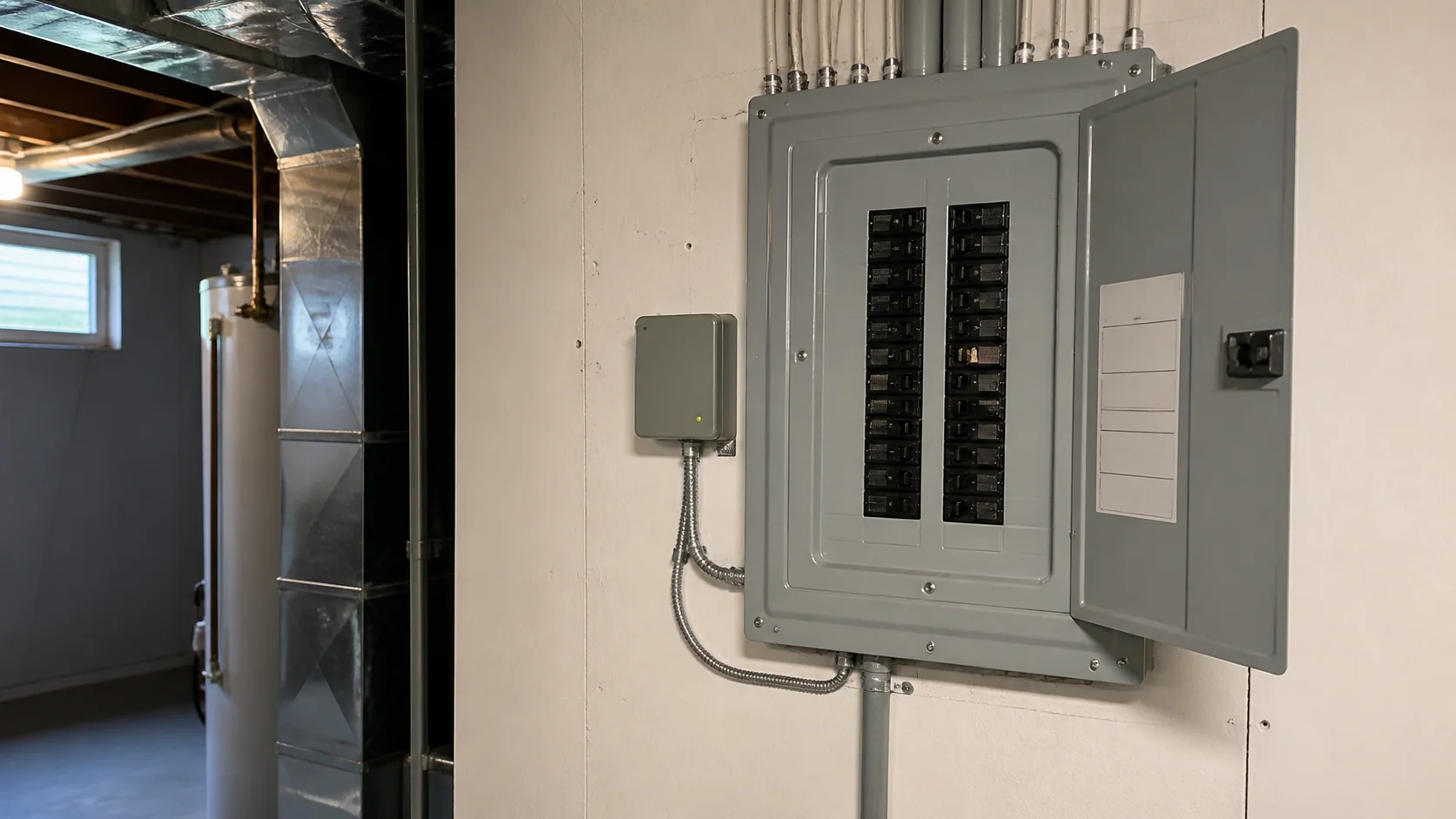
A recent lightning strike at our parents' home damaged several electrical components. It turned a risk that is easy to treat as abstract into a practical reminder: modern homes contain sensitive electronics in far more places than the televisions and computers we usually think about.
What is an electrical surge?
A surge is a brief increase in voltage. It can originate outside the home or from switching events within the electrical system. Lightning is the dramatic example, but it is not the only source. Furnaces, appliances, controls, networking equipment, chargers and smart devices can all contain electronics worth considering.
What whole-home surge protection is meant to do
A surge protective device at the electrical service is designed to divert certain transient overvoltages before they travel farther through branch circuits. It provides broader coverage than relying only on plug-in strips at a few receptacles.
No device makes a home lightning-proof, and protection does not guarantee that every connected product will survive every event—especially a direct or very severe strike. The goal is risk reduction through a properly selected, installed and layered system.
A layered approach
| Layer | Role |
|---|---|
| Service or panel protection | Provides a first line of defence for many electrical circuits in the home. |
| Point-of-use protection | Adds protection close to sensitive electronics and may include data or coax connections where appropriate. |
| Grounding and bonding | Must be evaluated as part of the electrical system; a surge device is not a substitute for deficiencies. |
| Equipment-specific guidance | Manufacturers may specify protection, disconnect or installation requirements for their products. |
Questions to ask during an assessment
- Is the existing panel suitable for the proposed device?
- Where will the protection be installed and how will its status be monitored?
- Which sensitive systems also need point-of-use or communication-line protection?
- What events and failure modes are—and are not—covered by the equipment warranty?
- Does the home's grounding and bonding warrant further review?
During a thunderstorm
Environment and Climate Change Canada notes that lightning current can follow wires and pipes. Follow official lightning-safety guidance and avoid contact with corded electrical equipment and plumbing during a storm. See the current Government of Canada lightning safety overview.
This article provides general risk-reduction guidance, not a guarantee against lightning or surge damage. Product selection and installation should be based on the home, electrical equipment and current code requirements.